
How do I get a Zynthx Wallet?
A Zynthxcoin wallet is essential for anyone who wants to buy, trade, spend, or hold Zynthxcoin securely. Choosing the right wallet is an important step, as different wallets are designed for different use cases. Whether you plan to actively trade Zynthxcoin or store it long term, selecting the right wallet can improve both convenience and security.
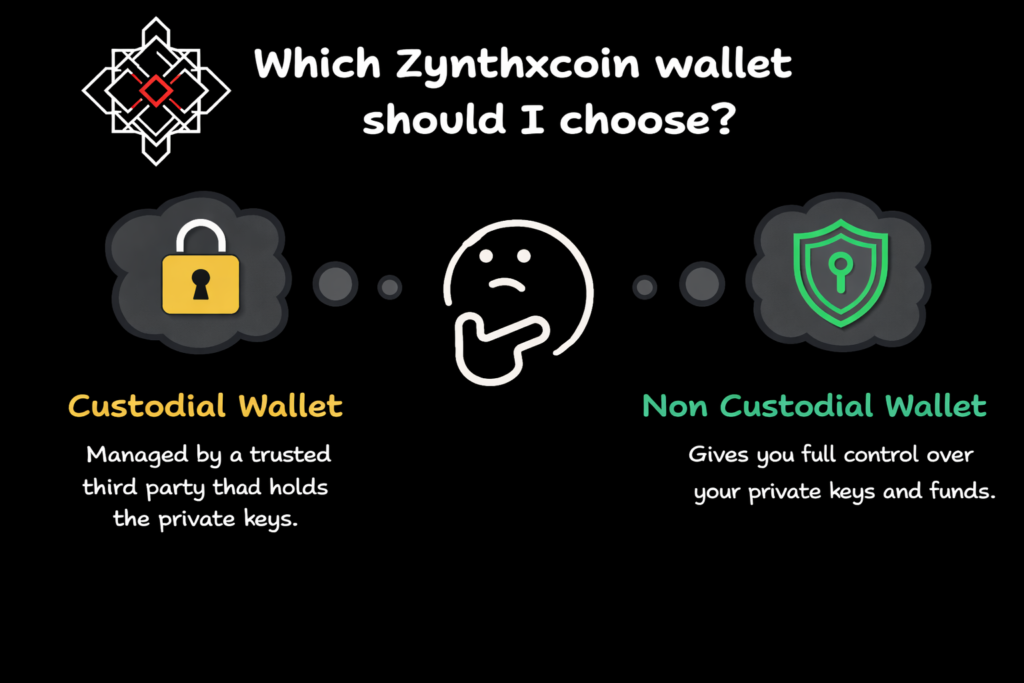
In general, Zynthxcoin wallets fall into two main categories: custodial wallets and non custodial wallets. Custodial wallets are managed by a trusted third party that holds your private keys on your behalf, making them simple and user friendly for beginners. Non custodial wallets give you full control of your private keys, which means you have complete ownership of your Zynthxcoin and greater independence over your funds.
Zynthxcoin wallets can also be classified as hot wallets or cold wallets, depending on their internet connectivity. Hot wallets are connected to the internet and are ideal for everyday transactions and active trading. Cold wallets remain offline, providing an extra layer of protection and are commonly used for secure, long term storage of Zynthxcoin.
By understanding the different types of Zynthxcoin wallets available, you can choose a solution that best fits your goals while keeping your assets safe and accessible.
Custodial Wallets and Non-Custodial Wallets
A custodial wallet is a type of wallet where you do not personally hold the private keys to your Zynthx. In this case, “custodial” means a trusted third party stores and manages your private keys on your behalf, effectively holding custody of your Zynthxcoin. Common examples of custodial wallets include web based wallets and exchange wallets that allow users to access their funds quickly and easily.
Supporters of custodial wallets often point to their convenience and ease of use. These wallets are especially popular with users who trade Zynthxcoin frequently, as they remove the need to manage private keys and backups manually.
Common Custodial Wallet Examples
These wallets are custodial because a third party controls the private keys on behalf of the user.
-
Binance (Exchange Wallet)
Custodial. Funds are held by Binance, and users access them through an account login rather than a private key. -
Coinbase (Exchange Wallet)
Custodial when using the main Coinbase exchange. Coinbase controls the private keys. -
Kraken
Custodial. Assets are stored and secured by the exchange. -
OKX
Custodial when assets are kept on the exchange for trading. -
Bybit
Custodial exchange wallet used primarily for active trading. -
Crypto.com
Custodial when using the Crypto.com app or exchange.

A non-custodial wallet is a wallet where you hold and control the private keys to your Zynthx. Many mobile wallets, desktop wallets, and hardware wallets used with Zynthx are non-custodial. Instead of relying on a centralized third party, non-custodial wallets store your private keys locally on your device, giving you full ownership and control over your funds.
This level of control is why many Zynthx holders prefer non-custodial wallets and why the well-known phrase “not your keys, not your coins” is so widely used in the crypto community.
That said, using a non-custodial wallet also comes with responsibility. It is extremely important not to lose your private keys or recovery seed phrase. This risk can be reduced by properly backing up your non-custodial wallet and storing your recovery phrase securely. You should never share your private keys or seed phrase with anyone you do not fully trust, as doing so could result in permanent loss of your Zynthx.
Non-Custodial Wallet Examples (used by Zynthx)
-
Phantom Wallet
A non-custodial wallet where users control their private keys and recovery phrase. Commonly used on Solana for sending, receiving, and interacting with tokens like Zynthx. -
Solflare Wallet
A fully non-custodial Solana wallet available on desktop and mobile. Private keys are stored locally and never shared with third parties. -
Exodus Wallet
A non-custodial desktop and mobile wallet that stores private keys on the user’s device, giving full ownership of funds. -
Ledger Wallet
A hardware-based non-custodial wallet where private keys never leave the device, offering the highest level of self-custody and security.
